
How to Use 'Olde' in Modern Writing: A Practical Guide
You see 'Olde' on a pub sign or a souvenir tea towel and assume it's just a quirky misspelling of 'old.' It's not. That extra 'e' carries a specific weight—a deliberate archaism that signals 'ye olde' charm, usually for commercial or nostalgic effect. I learned this the hard way while editing a heritage trail brochure: a colleague insisted on 'Olde Towne' for a district founded in 1842, and the local historical society nearly revolted. They wanted plain 'Old Town.' So before you sprinkle 'olde' into your project, know what you're invoking.The word isn't random. 'Olde' emerged as a pseudo-archaic spelling in the 18th and 19th centuries, when antiquarians and shopkeepers wanted to evoke a pre-modern past. It's not genuine Middle English—Chaucer wrote 'old' or 'olde' depending on dialect, but the modern 'olde' is a later invention. Think of it as linguistic cosplay. That's why you see it clustered in tourism。craft brewing, and fantasy fiction. A tavern called 'The Olde Bell' feels warmer and more rooted than 'The Old Bell.' A bookstore named 'Olde Pages' suggests dusty hardbacks and a cat sleeping on a radiator. The 'e' is doing emotional labor, not historical accuracy.Practical rule one: never use 'olde' in formal or technical writing. If you're drafting a legal contract, a scientific paper, or a news report。'olde' will read as either a joke or an error. Stick with 'old.' Rule two: use it sparingly in branding, and only if your audience expects a wink. I've seen a tech startup called 'Olde School Analytics' that felt forced—customers couldn't tell if it was ironic. Contrast that with 'Olde Fashioned Kettle Corn' at a farmers market: perfect fit, because the product is literally old-fashioned. Rule three: don't mix 'olde' with other archaisms like 'shoppe' or 'ye' unless you're fully committing to the bit. Half-hearted 'olde' looks like a typo;full 'olde' looks like a theme park.Watch out for inconsistent capitalization and hyphenation. 'Olde' is almost always capitalized when part of a proper name—'Olde Town,' 'Olde English.' But in a phrase like 'an olde-worlde feel,' lowercase is fine. Hyphenate 'olde-worlde' (a Britishism meaning quaintly old-fashioned);don't write 'olde worlde.' And never pluralize it—'oldes' isn't a thing. I keep a note in my style guide: 'Olde = decorative。
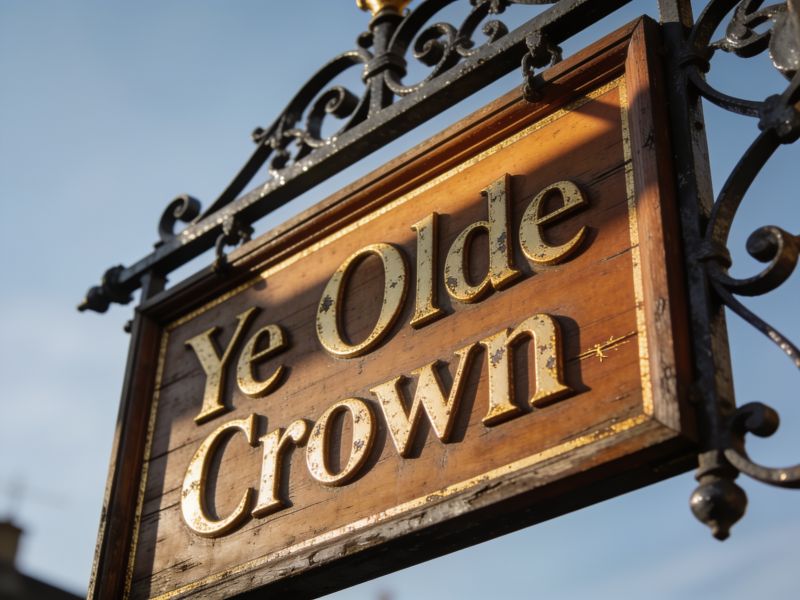
not descriptive.' That means you wouldn't write 'the olde man walked slowly' in a short story unless you're writing parody or historical fantasy. It's a label, not an adjective for everyday use.If you're on the fence, test it aloud. Say 'Ye Olde Coffee House' and then 'The Old Coffee House.' The first sounds like a place that sells spells and scones;the second sounds like where you grab a flat white before work. Neither is wrong—just know which vibe you're paying for. For heritage campaigns。I now default to 'Old' unless the client specifically requests the archaic spelling for brand reasons. That one letter can shift a project from credible to kitschy. Use 'olde' like a spice: a pinch adds flavor, a handful ruins the dish.
Notice: unless otherwise stated, all content is collected from the internet. If it infringes your rights, please contact us for removal.